

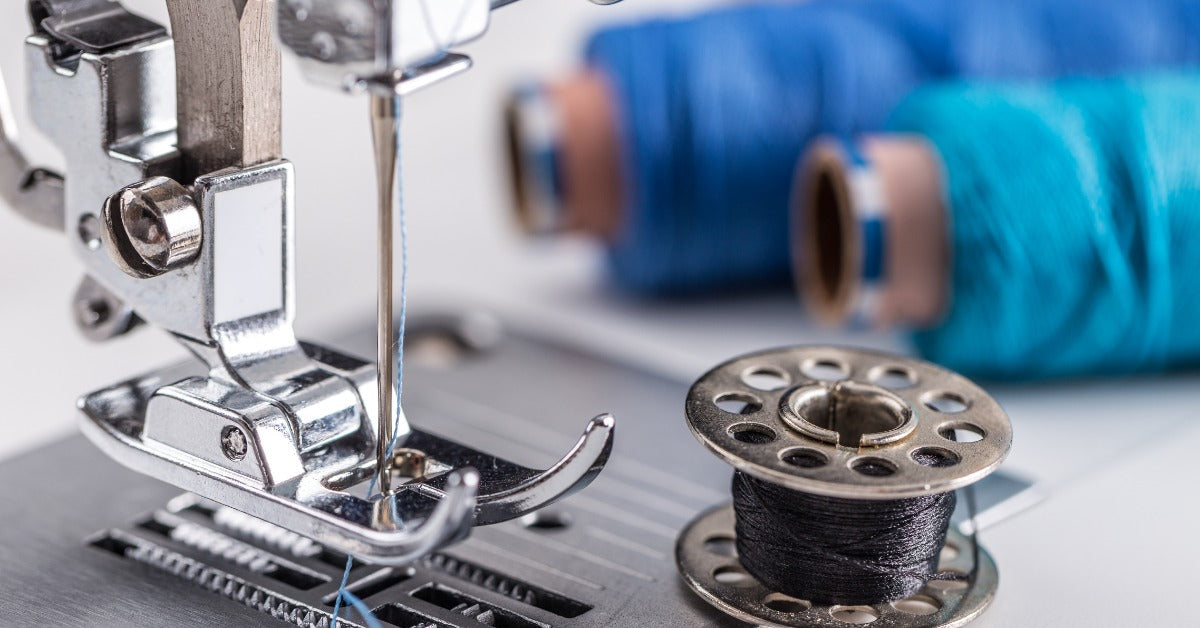
It usually doesn’t take many sewing projects before you start noticing small tasks that slow you down. You might find yourself rewinding the same bobbin, struggling to keep a seam straight, or supporting a large piece of fabric on a surface that feels too small. These eight sewing machine accessories are worth buying because they make everyday tasks easier without filling your workspace with tools you’ll rarely use.
1. Adjustable Sewing Machine Light
Built-in machine lighting doesn’t always illuminate every part of the work area as clearly as you’d like. An adjustable sewing light can direct extra light toward the needle, presser foot, seam markings, or any other detail you need to see closely.
Look for a light that stays securely in place after you adjust it. It should brighten your work without blocking your view or getting in the way of your hands. Also consider how it attaches or stands so it fits comfortably around your existing sewing setup.
2. Sewing Machine Needle Assortment
Another sewing machine accessory worth buying is an assortment of needles because no single needle works equally well with every fabric. The right size and point style can vary depending on the material, thread, and type of stitching you’re doing. Keeping a few common options nearby makes it easier to switch when a project calls for something different.
Needle requirements can also vary from one machine to another. Check the recommendations for your project and the specifications for your home sewing machines.
A basic assortment of sewing needles may include:
- universal needles for many woven fabrics
- ballpoint or stretch needles for knits
- denim needles for dense woven fabrics
- quilting needles for layered quilt projects
- embroidery needles for machine embroidery
- fine needles for lightweight materials
3. Specialty Presser Feet

The presser foot holds and guides fabric as it moves beneath the needle, but different foot designs are made for different tasks. Specialty feet can make certain techniques easier to control and may produce more consistent results. Instead of collecting every option available, focus on the feet that match the projects you sew most often. A zipper foot, walking foot, or edge-stitching foot may come in handy more often than a highly specialized option.
Useful choices may include:
- zipper feet for stitching close to zipper teeth
- buttonhole feet for creating machine-sewn buttonholes
- edge-stitching feet for guiding stitches near an edge
- walking feet for managing multiple fabric layers
- free-motion feet for free-motion quilting
- blind-hem feet for creating discreet hem finishes
4. Sewing Machine Mat
A sewing machine mat creates a stable surface beneath your machine while you work. It can reduce sliding and limit some of the vibration that happens during sewing. Many mats also protect the table underneath from scratches and scuffs.
Some sewing machine mats include pockets or organizers along the front edge for storing small tools and accessories. Before buying one, check that the mat is large enough for your machine and fits comfortably on your sewing table.
5. Quilting Extension Table
Large pieces of fabric can become difficult to control when most of their weight hangs over the edge of your sewing area. An extension table creates a wider surface around the machine, allowing more of the project to stay supported while you work. That extra space can be useful for quilting, home décor projects, and other pieces with bulky or oversized sections.
With more of the fabric resting near machine level, you won’t have to lift and reposition it as often. Before buying one, check that the table is compatible with your machine and leaves enough room for you to work comfortably. This can make it easier to guide the material steadily through the machine. Many extension tables are removable, so you can put them away when you want a smaller sewing setup.
6. Extra Bobbins

Changing thread colors is much quicker when commonly used colors are already wound and ready to go. Extra bobbins also let you prepare several thread colors before starting a project instead of stopping midway to rewind one. That can be especially convenient when a design calls for frequent color changes.
Because bobbins take up very little space, keeping extras on hand is usually easy. A bobbin case or organizer can prevent loose thread from tangling while keeping colors visible and easy to find. If you use specialty threads, labeling each bobbin makes it easier to identify the right one when you need it.
7. Sewing Machine Carrying Case
Even if your sewing machine usually stays at home, there may be times when you need to take it to a class, event, repair appointment, or another workspace. A carrying case gives the machine a dedicated place to stay during transport while reducing exposure to dust and minor bumps. Some cases also include storage for cords, pedals, manuals, and smaller accessories.
A case can be useful at home, too, especially if you don’t leave your machine set up all the time. Storing the foot control and power cord with the machine makes them easier to find when you’re ready to sew again.
8. Seam Guide or Magnetic Guide
Keeping a consistent seam allowance can be tricky, particularly when you’re watching both the fabric edge and the needle. A seam guide gives you a steady reference point as the fabric moves through the machine. It can be useful for garments, quilts, bags, and other projects that require long, straight seams.
Guide styles vary, so check how a particular option attaches to your machine before using it. Position the guide according to the seam allowance required for your pattern or project. Then let the fabric move alongside it naturally rather than pushing the material firmly against the guide.
The best accessory collection is one that grows with the way you sew. As you try new fabrics, techniques, and projects, you’ll get a clearer sense of which tools are useful to keep nearby. Think about where you tend to pause, reposition fabric, switch tools, or correct your work as you sew. Choosing accessories for those moments can make your setup more efficient and fun to use.