

A full-size quilt can feel like a major commitment when you’re still getting comfortable with piecing, quilting, and binding. Smaller projects let you practice those skills without managing yards of fabric or spending weeks on a single design. Simple small quilt projects for beginners are a practical way to build confidence while creating useful pieces for your home, gifts, or seasonal décor. The ideas below give you several ways to practice core quilting techniques and see which types of projects you enjoy most.
Quilted Tote Bag
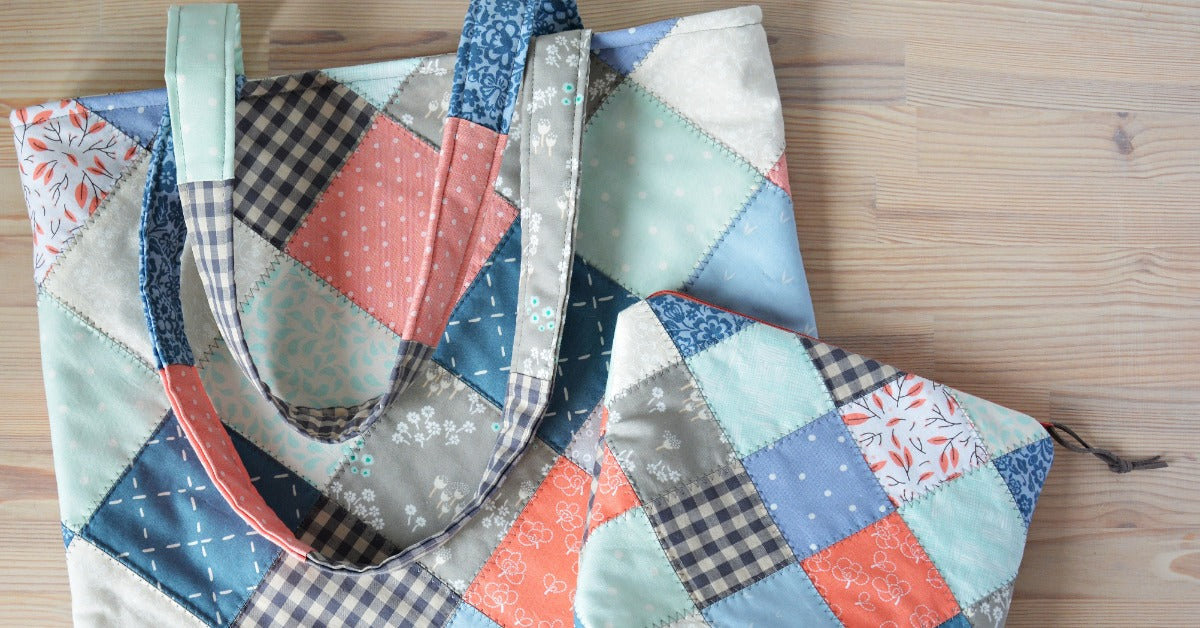
For a quilted tote bag, you can piece the outer panels from strips, squares, or a single fabric print before adding batting and quilting stitches. The finished panels give you practice keeping layers even while creating something you can use for errands, classes, or sewing supplies.
For an easier build, keep the bag shape rectangular and use sturdy fabric for the lining and handles. You can add an interior pocket for small items or leave the inside open for more carrying space. Boxed corners give the tote a wider base, while reinforced stitching makes handles more secure. You can also topstitch around the opening for a cleaner finish and a little extra structure.
Quilted Table Runner
A table runner is a small quilt project that lets beginners practice borders, batting, and binding. Using two or three coordinating fabrics can keep the design simple while still giving the runner plenty of visual interest.
You can size the runner for a dining table, coffee table, dresser, or sideboard. A shorter version may require only a few quilt blocks, while a longer one gives you more practice keeping rows aligned. Because the edges are straight, you can focus on getting a clean trim and even binding.
Beginner Baby Quilt

With a baby on the way, a small quilt is a meaningful project that’s manageable for a beginner. A basic grid of squares or wide strips keeps the design simple while giving you useful practice joining blocks and rows. Its smaller size can also make it easier to keep the quilt layers smooth while stitching.
Because baby quilts may go through plenty of washes, make yours durable. Check the care instructions for the fabric, batting, and thread so you can clean them all in similar ways. If the fabric may shrink or bleed, prewash it before cutting so that the finished quilt holds up better over time.
Quilted Pillow Cover
A quilted pillow cover turns a small fabric panel into a useful accent for a sofa, chair, or bed. You can make the front from a few strips, squares, or simple blocks before you add batting and quilting stitches. Because you’re working with a compact surface, it’s easier to experiment with fabric combinations without using much material.
An envelope-style back is a simpler construction because there’s no zipper to install. After quilting the front panel, you can layer the backing pieces and stitch around the outer edges. Once you turn the cover right side out, you’ll have practiced piecing, quilting, and basic construction in one small project.
Mini Wall Quilt
A mini wall quilt gives you more freedom to experiment because the finished piece doesn’t need to function as bedding. You might work with geometric shapes, seasonal motifs, fabric panels, or decorative stitching. Its compact size also makes it a convenient project for practicing fabric control on a quilter’s sewing machine.
Wall quilts are especially useful when you want to try a technique before committing to a larger piece. For example, you can experiment with appliqué, decorative stitches, unusual fabric combinations, or a quilting pattern you haven’t used before. Since the quilt won’t receive the same wear as one used on a bed or sofa, you can focus more on visual details.
Easy Display and Hanging Options
If you want to display your wall quilt on a rod, you can add a hanging sleeve across the upper back. For a smaller quilt, corner pockets can hold a lightweight support while staying mostly out of sight. If you’d rather skip the rod, use a specialized quilt hanger to grip the top edge instead. Decide how you want to display the quilt before finishing the binding so you can add sleeves, tabs, or pockets cleanly.
Small Lap Quilt
A lap quilt is a great project that’s easier to handle than a full bed quilt. Repeating blocks, wide strips, or large fabric squares can keep piecing straightforward and reduce the detailed cutting involved. The larger surface also gives you more experience moving multiple layers smoothly through the machine.
Before choosing dimensions and materials, consider how you'll use the quilt. A lightweight version may suit mild weather, while thicker batting can create a warmer finished piece. A lap quilt should be large enough to cover your legs. You can make it wider if you want extra coverage for reading, relaxing, or keeping on the sofa.
Simple Patchwork Quilt

With a small patchwork quilt, you can practice with matching seams, arranging fabric, and keeping blocks consistent. Because the design relies on repeated shapes, you can focus on accurate cutting and stitching instead of complicated construction. Working with fewer blocks also makes it easier to spot areas where your technique is becoming more consistent.
A few beginner-friendly block options include:
- equal-size fabric squares
- long rectangular strips
- simple four-patch blocks
- alternating square blocks
- sections of wide strip pieces
Squares are especially manageable because you can cut each piece to the same dimensions. Rectangles and strips add variety without introducing angled seams or more complex templates. You can arrange these shapes in repeating rows, alternate fabrics, or create simple geometric patterns.
Quilted Placemat Set
A set of placemats lets you repeat the same construction steps several times. With each repetition, cutting, layering, quilting, and binding will feel more familiar. You can make a coordinated set with matching fabrics or change one print in each placemat for a little variation.
Finishing details can give a simple placemat a more complete look without adding much difficulty. Straight-line quilting works well for grids or stripes, while stitching near seam lines can emphasize the pieced design. Binding can blend into the main fabric or add contrast around the edges.
Small Memory Quilt
A memory quilt turns meaningful clothing, fabric scraps, or pieces from previous sewing projects into a compact keepsake. Working on a smaller scale means you don’t need as much material, and it can make the layout easier to plan.
Before cutting sentimental material, look closely at its weight, stretch, and overall condition. Lightweight or stretchy fabrics may need an appropriate stabilizer or interfacing before you piece them with quilting cotton. Arranging all the pieces before you begin sewing can also make it easier to balance colors, prints, and meaningful sections throughout the quilt.
Quilting is both technical and creative, which is part of what makes it so rewarding to learn. You’ll practice skills like piecing, quilting, binding, and fabric coordination while also exploring different colors, motifs, and design styles. Trying a variety of projects gives you space to discover which combinations and techniques you’re most drawn to. With each finished piece, you can build stronger skills and a clearer sense of your own artistic flair.