

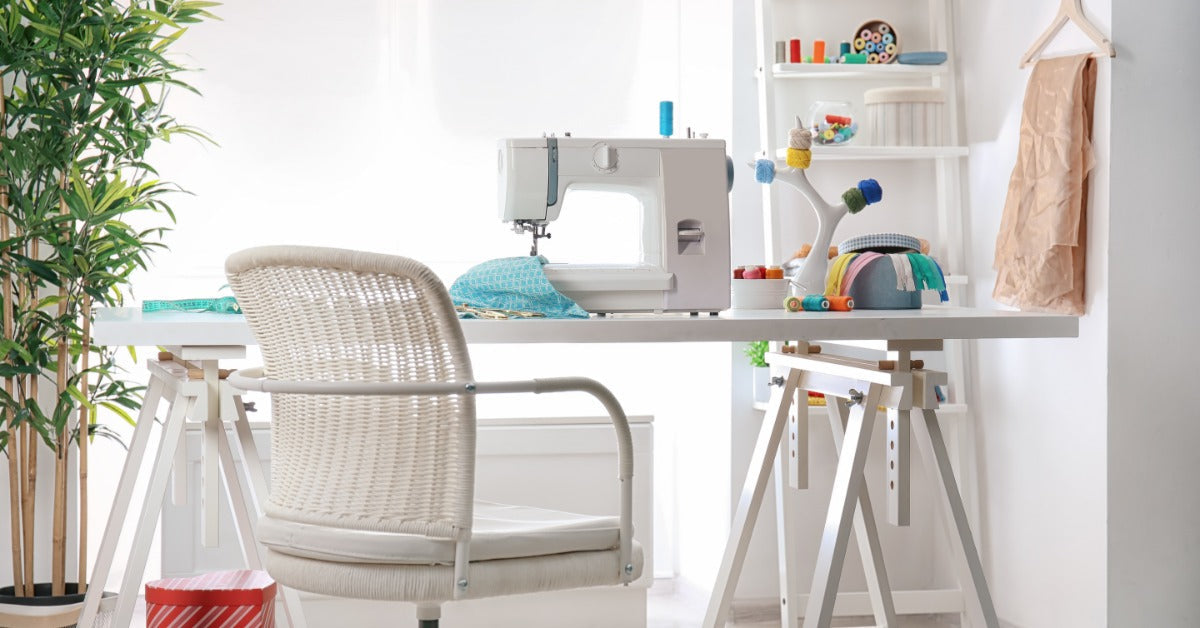
A sewing project can get frustrating when you're constantly moving supplies, clearing space, or struggling to manage large pieces of fabric. A dedicated sewing cabinet keeps your workspace organized and comfortable, giving you a practical place to work on the projects you enjoy. But with so many designs and features available, comparing your options can feel overwhelming. Here's what to consider before buying a sewing cabinet so you can find the right fit.
Available Space and Cabinet Dimensions
Measure the area where you plan to use it, including the space around your chair and other furniture. Some cabinets look compact when closed but take up considerably more room when their side panels or extensions are opened. Compare both the open and closed dimensions with your available floor space so you don't end up with a cabinet that makes the room feel cramped.
Think about how you normally move around your workspace while cutting, pressing, and sewing. A large cabinet might offer plenty of surface area, but that extra space won't help if you have to squeeze past it to reach other equipment. If your sewing room serves multiple purposes, a cabinet that folds into a smaller footprint may be a better fit.
Clearance for Doors and Extensions
Cabinet doors, drawers, and fold-out sections need enough clearance to open without hitting walls or nearby furniture. Check which direction the doors swing and how far extension panels reach when fully opened. You'll also need room to pull out your chair and adjust your seating position while sewing. If you're placing the cabinet near a doorway or closet, make sure you can still access those areas when everything is open.
Sewing Machine Size and Compatibility

Not every sewing cabinet works with every machine, so check compatibility before comparing other features. Start by measuring your sewing machine and confirm its weight, particularly if you own a larger quilting or embroidery model. Some cabinets have specific opening dimensions or require a custom insert to create a level sewing surface around the machine.
It's also worth thinking about whether you might upgrade your machine in the future. A cabinet with a larger machine opening and generous weight capacity could give you more flexibility if you switch models. However, you'll still need to check the manufacturer's compatibility requirements rather than assuming a cabinet will accommodate any machine.
Manual vs. Electric Machine Lifts
Many sewing cabinets include a lift mechanism that lets you raise or lower the machine to different working positions. With a manual lift, you adjust the machine mechanically, while an electric lift uses motorized control. Depending on the design, the lift may offer multiple positions for flatbed sewing, free-arm access, or storing the machine beneath the work surface.
Machine Inserts and Replacement Options
Some sewing cabinets use custom inserts that fit around your machine to create a smooth, level sewing surface. These inserts are often sold separately and designed for specific machine models. Before buying a cabinet, check whether the correct insert is available for your machine and how much it costs. If you upgrade your machine later, you may need to buy a new insert instead of replacing the entire cabinet.
Work Surface and Extension Options
When comparing sewing machine cabinets, consider how much usable surface area each design offers. You should have enough room to guide fabric smoothly through the machine without pulling or bunching. This becomes especially useful when you're making quilts, curtains, or other projects that involve large sections of material.
Here's how work surface features can improve your workspace:
- Fold-out side panels provide extra room for fabric and supplies when needed.
- Rear extensions support larger projects as the fabric moves behind the sewing machine.
- Adjustable inserts fill gaps around compatible machines to create a flatter sewing surface.
- Drop-leaf sections provide additional workspace and fold away when not in use.
- Rounded edges allow fabric to move across the surface without catching on sharp corners.
Storage Space and Organization

Think about the supplies you reach for most often and where you'd prefer to keep them. A well-planned sewing cabinet can keep these items close without cluttering the main work surface. Drawers work well for smaller tools, while larger compartments can hold equipment and bulkier materials.
Storage placement matters just as much as capacity. Ideally, you should be able to reach frequently used items without standing up or moving away from your machine. If you regularly switch between different types of projects, look for compartments that can be rearranged as your storage needs change.
Adjustable Height and Ergonomics
Comfort should be a top priority when buying a sewing cabinet, especially if you spend hours at your machine. A surface that's too high may make you raise your shoulders, while one that's too low can make you lean forward. When evaluating cabinet heights, consider your natural sewing position.
Some cabinets offer adjustable working heights, but many have a fixed tabletop. If you're considering a fixed-height model, check whether your chair can be adjusted to create a comfortable setup. You'll also want enough legroom to position the foot pedal naturally and move your knees without bumping into drawers or other cabinet components.
Cabinet Materials and Durability
A sewing cabinet needs to withstand the weight and movement of your machine during regular use. Look for sturdy construction, secure joints, and hardware that can handle repeated opening and closing. A smooth, easy-to-clean tabletop is another practical feature, especially when you're working with fabric lint, loose threads, and small accessories. Hinges and drawer slides should also operate smoothly, since you'll use these components frequently over the years.
If you regularly rearrange your sewing room, wheels make a heavy cabinet much easier to reposition. Look for locking casters that prevent unwanted movement while you're sewing. Also check whether the wheels suit your flooring and whether the cabinet stays steady with its extensions open.
A good sewing cabinet can change how you spend your time at the machine. Instead of clearing a table or searching for supplies before every project, you can settle into a workspace that's ready when inspiration strikes. That convenience becomes especially valuable as you take on more ambitious projects or spend longer sessions sewing. Choose a cabinet that makes it easier to focus on the part you enjoy most: creating something new.