

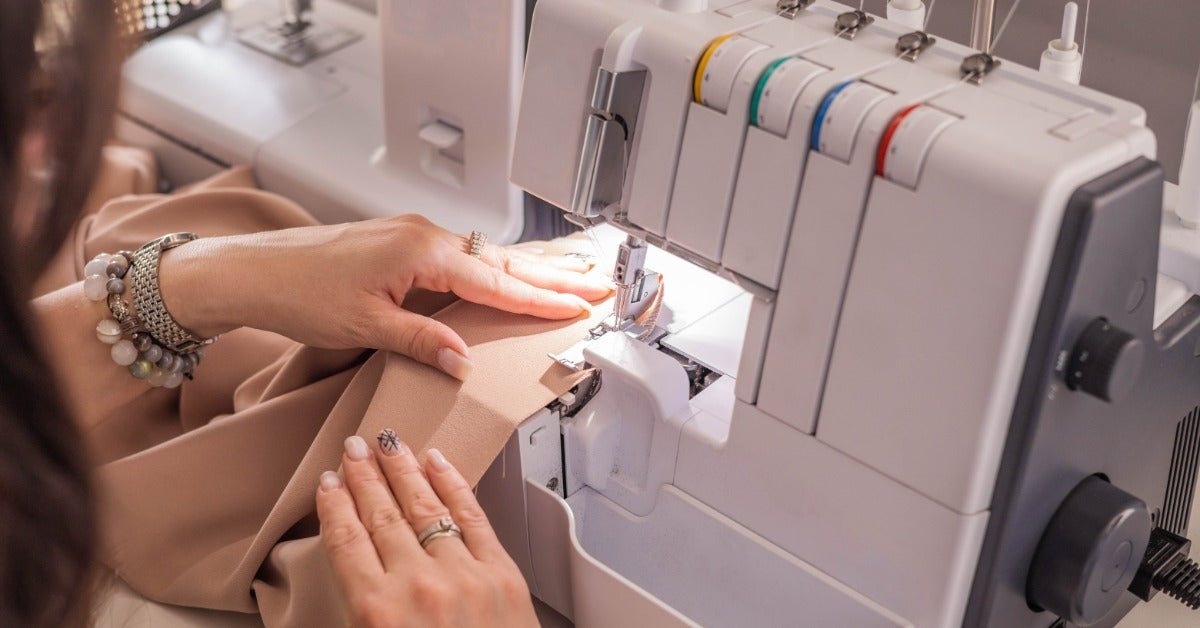
Finishing a project often involves more than simply sewing the pieces together. Raw edges and repeated seam finishing can add extra steps that slow you down. That’s why every sewist should consider a serger to streamline construction and create cleaner finishes. Understanding its main functions can show you where a serger fits into the types of projects you already make.
Sew, Trim, and Finish Together
A serger can stitch a seam, trim away excess fabric, and wrap thread around the raw edge as the material moves through the machine. Instead of completing each step separately, you can finish the edge in one pass. This can be especially useful on projects with long seams or multiple pieces that need the same finish.
As the fabric moves forward, the cutting blade trims the edge before the loopers form thread around it. Because the stitching wraps around the fabric edge, loose fibers stay contained instead of extending beyond the seam allowance. The result is a narrow, consistent finish that’s ready for the next construction step.
A serger can make the sewing process more efficient by letting you:
- Complete several construction steps without stopping to switch tools or techniques.
- Keep seam allowances more uniform when sewing multiple matching pieces.
- Remove excess fabric as you sew instead of trimming each seam afterward.
- Move through long or repeated seams with fewer interruptions between steps.
Create Neater Finished Seams
Unfinished seam allowances can fray as a project is handled, worn, or washed. A serger encloses the edge with thread while trimming it to a consistent width, giving the inside of the project a cleaner finish. Looking at different sergers and overlock machines can also show how stitch options and machine setups vary by seam type or finish.
This kind of edge treatment is useful for clothing and other projects where the inside may be visible or used frequently. It also keeps loose fibers from spreading beyond the seam allowance over time. For sewists who regularly work with fabrics that fray easily, this is another practical reason to consider a serger.
Sew Stretch and Knit Fabrics

Knit fabrics need seams that can move as the material stretches. Many overlock stitches have enough flexibility to expand with the fabric rather than creating a stiff line of stitching. That makes a serger well suited to jersey, rib knit, sweatshirt fleece, and other materials commonly used in stretch garments.
Because the machine trims the fabric while forming the seam, you also avoid cutting down every seam allowance afterward. This can keep knit seams narrower and more consistent throughout the project. The best stitch and settings will depend on the thread and amount of stretch in the fabric.
Common Projects Using Knit Fabrics
T-shirts and sweatshirts often include long stretch seams that you can assemble with a serger. Leggings and activewear may also use overlock stitching where the material needs room to move during wear. Before starting on the project, test the stitch on a scrap so you can adjust the settings if needed.
Adjust Fabric Feeding
Some fabrics stretch or pucker as they pass under the presser foot. Differential feed lets you change how the front and rear feed dogs move the fabric through the serger. By adjusting their relative speeds, you can reduce unwanted stretching or gathering when a material doesn't feed evenly.
This feature is especially useful with knits that tend to develop wavy seams. It can also improve results on lightweight fabrics that pucker during stitching. Since different materials respond differently, test the settings on a scrap first to avoid redoing a seam.
Complete Repeated Seams Faster
Projects with several similar seams can involve a lot of separate trimming and edge finishing. Because a serger combines those tasks, each seam may require fewer passes through the machine. That can make construction more efficient when you're sewing multiple pieces with the same type of finish.
These types of projects often include repeated seams:
- Garments with several panels or side seams often require the same construction and edge finish throughout.
- Pillow covers usually include matching edges.
- Cloth napkins made in multiples repeat the same seam or edge-finishing steps across every piece.
- Curtains often include long straight seams that require trimming and finishing over large sections of fabric.
- Home décor projects, such as cushion covers, may include several duplicate pieces.
Create Rolled Hems

A rolled hem creates a narrow finished edge instead of using a wider folded hem. On a serger, the fabric edge rolls under as the threads wrap around it, producing a compact finish. This technique works particularly well when a standard hem looks bulky or uses more fabric than you want.
Rolled hems are often used on napkins and other lightweight projects. Using the right fabric and settings can keep the edge from looking uneven or overly tight. Depending on the machine, you may need to adjust the stitch finger or tension.
Work With Multiple Thread Configurations
A serger isn't limited to one stitch setup. Depending on the machine, you can change the number of active needles and threads to create stitches with different widths and levels of edge coverage. That gives you more flexibility when matching a stitch to the fabric and the purpose of the seam.
For example, a lightweight edge finish may not need the same configuration as a structural garment seam. Decorative edging may call for an entirely different setup. Learning a few common configurations gives you more control than relying on the same stitch for every project.
Expand Your Sewing Capabilities
A serger doesn't need to replace your sewing machine to be useful. Conventional sewing machines are still better suited to many tasks, including topstitching, buttonholes, and construction details that call for precise straight stitching. Instead, the two machines can handle different parts of the same project.
You might use a sewing machine for detailed construction, then switch to the serger to finish seam allowances or assemble appropriate stretch seams. A serger can also handle rolled hems and certain knit projects on its own. Knowing which machine fits each step gives you more flexibility when planning a project.
Adding a new machine to your sewing space should come down to how you like to work. If you often move between construction, trimming, and finishing, a serger can make those transitions much more efficient. It can also open the door to techniques that are harder to achieve as cleanly with one machine alone. Invest in a serger to give yourself more ways to sew and create.