

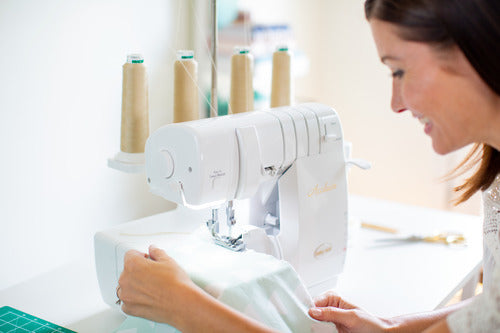
You just finished sewing a beautiful garment, but the edges look a bit raw. Or maybe you tried sewing a knit fabric on your standard sewing machine, and the seams popped the moment you stretched them. If you’re nodding your head right now, it sounds like you are ready to upgrade your sewing studio with an overlocker.
An overlocker, often called a serger, is the secret weapon for professional-looking seams. It trims the fabric edge and encases it in thread all in one step. It stops fraying in its tracks and gives your projects that clean, store-bought finish. But walking into a shop or browsing online for one can feel overwhelming. There are three-thread, four-thread, and even five-thread options. Some have air threading, while others require tweezers and a lot of patience. So how do you pick? We’re discussing a few key pointers to help you choose the best overlock sewing machine.
What Creates a Quality Overlock Stitch?
The first thing to look for isn’t a fancy screen or a dozen accessories. It’s the stitch quality. A great machine produces consistent, balanced stitches on a variety of fabrics. When you test a machine, look at the loops. They should sit right on the edge of the fabric—not hanging off (too loose) and not curling the fabric in (too tight).
High-quality machines handle speed without vibrating across your table. A sturdy metal frame usually indicates a machine that will stitch smoothly even at high speeds. When you visit us or read reviews, pay attention to what people say about tension. A good machine holds tension well, meaning you won’t have to fiddle with dials every five minutes.
How Many Threads Do I Actually Need?
This is the most common question we hear. Machines typically range from two to five threads.
- Two-Thread: Mostly used for finishing edges on lightweight fabrics or creating a rolled hem. It’s not meant for structural seams.
- Three-Thread: This is the standard for finishing edges to prevent fraying. It creates a professional look on wovens but isn’t as strong as a four-thread stitch for holding pieces together.
- Four-Thread: This is your best friend for constructing knit garments. It sews the seam and finishes the edge simultaneously with two needle threads, providing the strength and stretch you need for T-shirts or leggings.
- Five-Thread: This adds a chain stitch for extra stability. It’s often found on higher-end machines and is great for woven fabrics that need a very durable seam, such as denim.
Why Is Differential Feed Important?
If you plan to sew knits or lightweight fabrics, differential feed is nonnegotiable. It creates the difference between a wavy, stretched-out seam and a perfectly flat one.
Here’s How It Works
Your machine has two sets of feed dogs under the presser foot. Differential feed lets you control the speed of the front feed dogs relative to the rear ones. If you’re sewing a stretchy knit, you can adjust the feed to slightly gather the fabric as it sews, preventing that dreaded lettuce leaf wave.
In contrast, if you’re sewing a lightweight rayon that wants to pucker, you can adjust it the other way to keep the seam smooth.

Which Threading System Saves the Most Time?
Let’s be honest. Threading an overlocker has a bad reputation. The lower looper path on older models can feel like navigating a maze in a blindfold. But technology has come a long way. Think about the following features:
- Color-Coded Threading: Most standard machines use color-coded dots to guide you. If you follow the colors carefully, you will get the hang of it.
- Lay-In Tension: This makes threading easier because you simply slide the thread into the slot rather than wrapping it around a knob.
- Air Threading: This is the turning point. With the push of a button or a pump of a lever, a blast of air shoots the thread through the loopers instantly. If your budget allows, a serger overlock machine with air threading will save you hours of frustration and get you sewing faster.
Can the Machine Handle Heavy Fabrics?
If you dream of sewing denim jackets or thick fleece coats, you need a machine with piercing power. A high lift on the presser foot is crucial so that you can fit thick layers underneath.
Ask about the motor strength. A stronger motor creates better momentum to punch through multiple layers of canvas or denim without stalling.
How Easy Is It To Change Tension?
Tension anxiety is real. But the best machines make it manageable. Some high-end models offer automatic or micromatic tension. This means when you select a stitch—such as a rolled hem—the machine automatically sets the tension for you.
However, even with manual dials, positioning matters. Dials on the front of the machine are generally easier to read and adjust than inset dials. We love machines that come with a cheat sheet or quick reference guide right on the front panel, showing you the standard settings for common stitches.
Does the Brand Offer Good Accessories?
A basic machine comes with a standard foot, but the world of overlocker feet is vast and fun. Check what’s available for the model you’re eyeing, using this checklist:
- Gathering Foot: Perfect for attaching ruffles to skirts.
- Elastic Foot: Stretches and sews elastic onto swimwear or lingerie in one pass.
- Blind Hem Foot: Creates an invisible hem while finishing the edge.
- Beading Foot: Great for adding trims to costumes or home decor.
Why Buy From a Specialized Dealer?
You might find a cheaper price at a big-box store, but you often lose out on support and guidance. When you buy from our specialized sewing shop, you get more than a machine in a box. You get a community.
We provide:
- Education: We teach you how to use your specific machine so that it doesn’t sit in the closet.
- Service: Our factory-trained technicians keep your machine running smoothly for years.
- Troubleshooting: When a thread snaps or a stitch looks wonky, you can call us or stop by for help.
Your sewing journey should be full of joy and creativity. By considering these factors, you are well on your way to choosing the best overlock sewing machine for your skills and ambitions. Come visit us at Authorized Vac and Sew, sit down at a few models, and listen to the hum of a quality stitch. We can’t wait to see what you create next!