

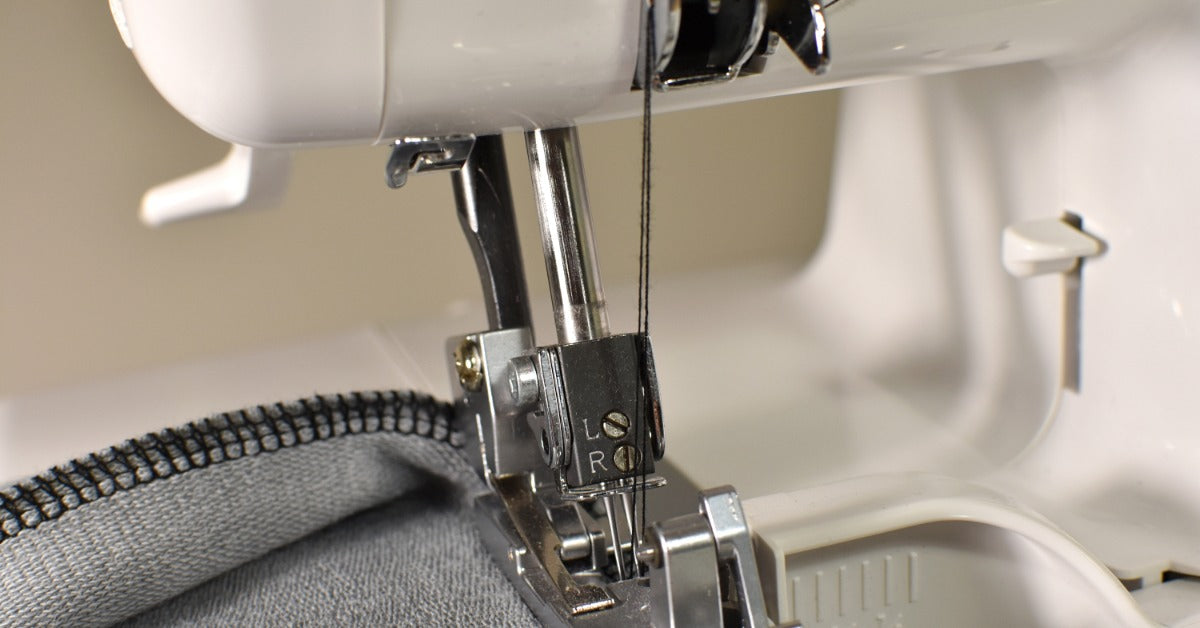
Finishing a sewing project should feel like a victory, especially when your current serger gives the edges a clean, professional look. But when you start sewing heavier fabrics, selling finished pieces, or making garments that require stronger seams, a basic overlock finish may feel limited. Compare four-thread and five-thread sergers based on fabric weight, seam strength, and the versatility you want.
What Sergers Do
A serger, also called an overlock machine, creates wrapped edge stitches that help fabric resist fraying. It uses loopers instead of a traditional bobbin, so the thread forms around the edge of the fabric while the knife trims away the excess.
That combination gives knitwear, woven seams, napkins, costumes, and upcycled clothing a clean finish. Additionally, many sewists like sergers because they speed up repetitive seam work.
Uses for the Overlock Stitch
An overlock stitch wraps thread around the raw fabric edge, which creates a flexible finish that works especially well on knits. A regular sewing machine can sew seams and some edge finishes, but it doesn’t trim and wrap the edge in a single motion. Therefore, many makers use both machines together rather than choosing one over the other. The sewing machine handles details like zippers and buttonholes, while the serger shines when making seams, edges, and stretch-friendly finishes.
Thread Counts
Thread count affects the stitch structure, seam strength, and the type of finish a serger creates. A four-thread machine typically uses two needles and two loopers to create a strong, stretch-resistant overlock seam. A five-thread serger adds another thread path, usually combining a chainstitch seam with an overlock edge.
Here are the main differences to keep in mind when comparing thread counts:
- Four-thread sergers work well for everyday garment seams.
- Five-thread overlock machines add a chainstitch for extra seam support.
- Four-thread stitches stretch nicely on knit fabrics.
- Five-thread stitches are suited to heavier sewing and production-style seams.
- Both options create clean edges faster than standard seam finishing.

Four-Thread Strengths
A four-thread overlock machine gives many sewists the best balance of strength and simplicity. It creates a sturdy seam and a finished edge at the same time, which works well for T-shirts, leggings, casual clothing, children’s garments, and many craft projects.
Four-thread models meet most home sewing needs. Moreover, four-thread setups feel approachable because they involve fewer thread paths than five-thread machines. Each added thread path means another tension setting, guide, and threading step to manage, which can make setup and troubleshooting take longer.
Best Everyday Uses
A four-thread serger suits sewists who want clean seams without adding extra complexity to every project. It handles many knit fabrics because the stitch stretches with the garment rather than fighting against it. Additionally, it works well for finishing woven seams before or after construction, depending on your workflow.
Five-Thread Strengths
A five-thread overlock machine brings extra seam security by pairing an overlock edge with a chainstitch seam. That structure appeals to people who sew heavier garments, durable everyday clothing, or items that get frequent wear.
The chainstitch portion creates a straight seam line, while the overlock portion finishes the raw edge beside it. As a result, the stitch setup resembles what many people see inside ready-to-wear clothing.
Extra Seam Support
Five-thread stitching is useful when the seam needs more stability than a standard overlock finish provides. Jeans-style seams, workwear-inspired pieces, structured woven garments, and thicker fabric layers may benefit from that added support. However, a five-thread serger may require more threading time, more thread cones, and a little more patience during setup.

Fabric Choices
When comparing four- and five-thread sergers, consider the types of fabrics you will sew. Knits usually pair beautifully with four-thread overlock stitches because the seam can stretch without popping right away. That flexibility helps the garment move with the body, especially around shoulders, waistbands, sleeves, and side seams.
Woven fabrics give you more room to decide based on the finished item. A lightweight blouse may feel perfectly secure with a four-thread finish, while a heavier jacket or utility garment may call for a five-thread seam. A denser fabric or high-stress seam may benefit from the added chainstitch support that a five-thread overlock machine provides.
Learning Curve
Many sergers and overlock machines include user-friendly features, such as color-coded threading guides and clear stitch settings, that make the learning process easier. Four-thread machines are usually easier to learn because they use fewer threads, fewer thread paths, and a slightly simpler stitch setup. Five-thread machines add more capability, but they also take a little more time to learn.
Threading the Machine
Threading is one of the first skills to learn because each thread must pass through the correct guides, tension discs, and loopers. A four-thread serger has fewer paths to manage, so color changes and rethreading may be quicker. A five-thread machine adds another path, giving you an extra stitch element to learn.
Adjusting Thread Tension
Tension controls how tightly each thread forms the stitch around the fabric edge. On a four-thread serger, tension changes usually feel more straightforward because fewer threads interact with each other. On a five-thread machine, you may need to adjust tension for both the straight chainstitch seam and the wrapped overlock edge. Testing on scraps helps you see how the full stitch will behave.
Managing Fabric Feed
Fabric feed refers to how the machine moves fabric under the presser foot while stitching. Both four-thread and five-thread overlock machines may include differential feed, which reduces stretching, waving, or puckering. The main difference is that five-thread seams may require more test sewing, as heavier fabrics and layered seams can respond differently to the added stitch structure.
Maintenance and Support
Sergers work hard because they stitch, trim, and finish fabric edges simultaneously. As you sew, lint can collect around the knife, loopers, and feed dogs, especially when working with fuzzy or textured fabrics. Regular brushing, fresh needles, and careful threading help the machine run smoothly and form cleaner stitches.
Support matters too, especially when you are learning a new machine or comparing accessories. Technicians can service the machine about once a year, or sooner if you notice skipped stitches, unusual noise, dull cutting, or tension trouble. Sewing classes also provide guidance on troubleshooting and how to make the most of your machine.
A four-thread and a five-thread overlock machine both make clean edges and strong finishes. Consider whether you value simpler everyday versatility or extra seam support for heavier, higher-stress projects. Authorized Vac and Sew carries sergers for hobby sewists, frequent makers, and anyone who wants finished projects to look neat inside and out. The right choice can help you sew with more confidence and enjoy the details that make your work feel complete.