

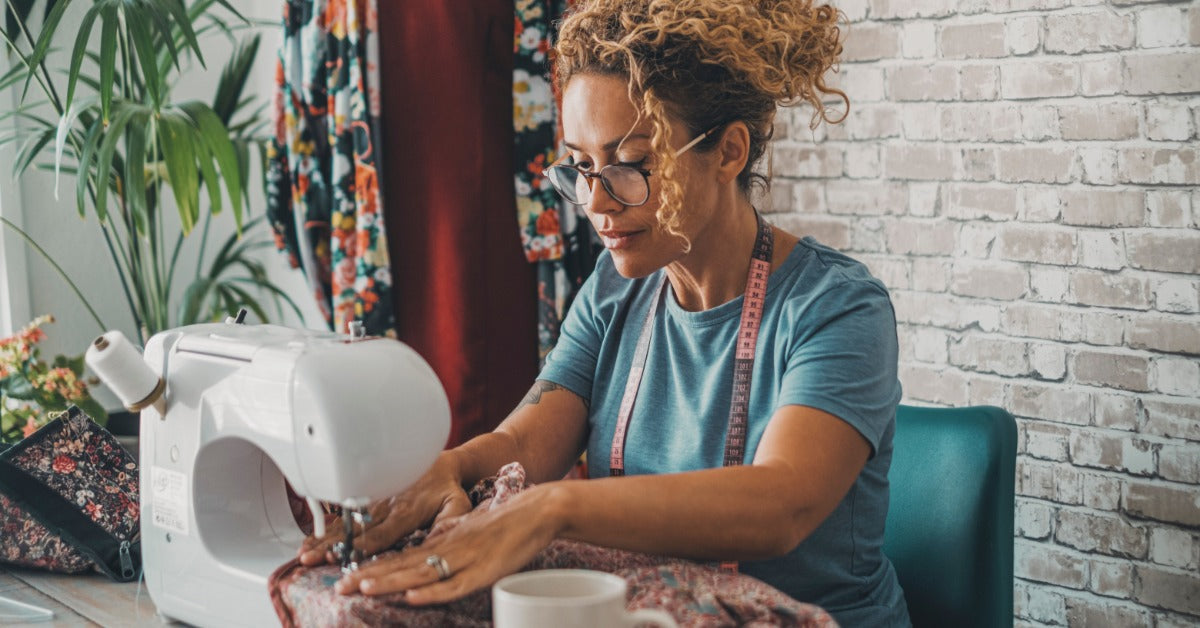
A sewing session can become uncomfortable when your chair or workspace doesn’t fit the way you move. Constantly shifting in your seat or reaching awkwardly for the foot pedal can break your focus and put extra strain on your body. Over time, a poor setup may contribute to aches and pains during longer projects. For these reasons, a sewing chair isn’t just another piece of furniture. The right features truly make a difference in your working posture, comfort, and movement at the machine.
Adjustable Seat Height
Seat height affects how your body lines up with the machine, table, and foot pedal. A useful adjustment range lets you keep your elbows near the work surface while your feet stay supported. Ideally, you should be able to operate the machine without reaching upward, leaning down, or stretching your leg toward the pedal.
Your chair may be set at the wrong height if you notice any of these signs:
- Your shoulders rise while sewing.
- Your feet don’t rest securely.
- Reaching the pedal feels awkward.
- Your knees press against the table.
- You lean toward the machine.
Comfortable Seat Design
A thick cushion doesn’t automatically make a seat comfortable for a long project. Seat depth and firmness both affect how well the chair supports your weight, while the overall shape can influence how stable you feel at the machine.
Supportive Cushioning
Cushioning should feel comfortable without sinking so much that you lose a steady sitting position. A very soft seat may feel inviting at first, but it can become less supportive as a sewing session continues. Firmer cushioning can distribute your weight while giving you a stable base for controlling fabric and using the foot pedal.
Comfortable Seat Depth
Seat depth is the distance from the front edge of the cushion to the backrest. If the seat is too deep, you may slide forward and lose support from the backrest. If it’s too shallow, your thighs may not feel adequately supported. A comfortable depth lets you sit against the backrest while still leaving some space behind your knees.
Supportive Backrest Design

A backrest should support you without restricting the small shifts and forward movements that naturally happen while sewing. Sewing chairs feature backrests designed to improve your comfort and posture. The right support makes a difference in how your lower back and shoulders feel.
Lower Back Support
Pay attention to where the backrest meets your lower back when you sit in your normal sewing position. Even a well-padded chair may feel uncomfortable if that support lands too high or too low. Your back should feel supported when you sit upright without forcing you into an awkward posture.
Adjustable Backrest Position
An adjustable backrest gives you more control over how closely the chair fits your body. Depending on the design, you may be able to change its height, angle, or distance from the seat. Those small adjustments can make a noticeable difference when you alternate between sitting upright and leaning slightly toward detailed work. The controls should also be simple to use whenever your position changes.
Smooth, Stable Mobility
Moving around a sewing room may mean turning toward storage, reaching another work surface, or repositioning yourself at the machine. When comparing sewing chairs for sale, consider both how freely a chair moves and how steady it feels once you’re ready to sew.
Appropriate Casters for Flooring
Casters can behave very differently depending on the surface beneath the chair. Wheels that glide easily across carpet may feel too loose on a hard floor, while some styles may drag on thicker flooring. Think about the surface in your sewing area before deciding how much rolling resistance feels right.
Stable Swivel Base
A swivel base lets you turn toward nearby tools or work areas without moving the entire chair. However, that convenience is only useful if the base still feels steady while you’re facing the machine and using the foot pedal. Check how balanced the chair feels as you rotate or lean slightly to one side. Smooth movement paired with a stable base makes repositioning feel controlled rather than wobbly.

Easy-To-Use Adjustments
Adjustability is most useful when the controls are easy to reach and understand. A chair can offer several settings, but awkwardly placed levers or complicated mechanisms may make those features frustrating to use.
You may want to raise or lower the seat when switching between machines, working at a different table, or adjusting your position for a longer project. You should be able to locate and operate the main chair controls while seated. Height levers and other frequently used adjustments should move smoothly without requiring excessive force or awkward reaching.
Space-Saving Chair Features
A chair needs room to roll, swivel, and move away from the table. Its footprint affects how much usable space remains around your sewing station. Compact dimensions can be especially useful in rooms that also contain cabinets, cutting surfaces, fabric storage, or multiple machines.
These sewing chair features are great for more compact spaces:
- a narrow seat profile
- a low-profile backrest
- an armless design
- clearance beneath the table
- a small turning radius
- a compact wheelbase
Durable, Easy-Clean Materials
Thread clippings, lint, fabric fibers, and dust naturally collect around an active sewing area. Upholstery that’s easy to vacuum or wipe down can simplify routine cleanup, particularly on chairs with seams or textured surfaces where debris can accumulate. It’s also worth checking the care instructions before using any cleaner so you know what the material can handle.
Durability involves more than the upholstery. The chair’s structure also needs to withstand frequent use and repeated adjustments. Moving parts should continue to feel secure as you swivel, roll, or change the seat height.
Comfort at the sewing machine often comes down to small details that are easy to overlook at first. A chair that fits your body and workspace makes each session feel smoother and less tiring. By focusing on the features you truly need, you can narrow down your options without getting distracted by unnecessary extras. If you’re using a regular chair or your current sewing chair is worn out, now’s the perfect time to upgrade your equipment for a better experience.