
A sewing project can become frustrating when your machine struggles with thick layers, narrow seams, or tricky fabric edges. The right presser foot or specialized accessory can make these tasks easier without requiring an entirely new machine. From installing zippers to creating decorative gathers, sewing machine attachments expand project options. Here are popular options and the tasks they’re suited for.
Walking Foot
A walking foot moves the top layer of fabric along with the bottom layer as it passes through the sewing machine. This extra feeding action reduces shifting, bunching, and uneven stitching with multiple layers. It's especially useful for quilting and handling thick materials or fabrics that stretch or slip.
A standard presser foot relies on the machine's feed dogs to move fabric from underneath, while a walking foot also feeds it from above. This keeps layers moving together, even across long seams or bulky sections. Many walking feet include a quilting guide that makes it easier to maintain consistent spacing between parallel rows of stitches.
When To Use Even-Feed Stitching
Even-feed stitching is useful when sewing a quilt sandwich because the backing, batting, and quilt top need to move together. It's also a good choice for joining plaid or striped fabrics, where shifting layers can cause patterns to become misaligned. When sewing stretchy knits, a walking foot may reduce the stretching and rippling that sometimes occur along seams. For materials like vinyl that don't slide easily, check whether a walking foot or a specialized nonstick foot is better suited to the job.
Zipper Foot
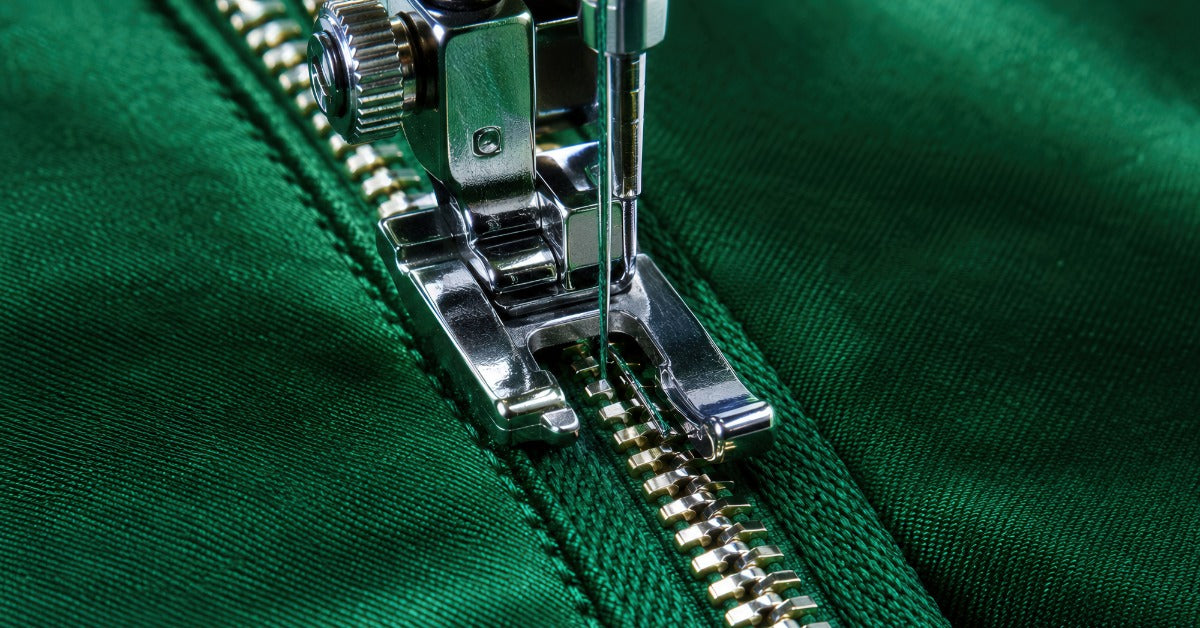
A zipper foot has a narrow design that lets you stitch close to zipper teeth and other raised edges. Depending on the model, you can adjust its position or attach it on either side to sew along the zipper tape. Among sewing machine attachments that expand project options, this foot is especially versatile because it's useful for both zipper installation and precise stitching near bulky components.
Here are a few ways you can use a zipper foot:
- Install zipper closures along the center seam of skirts, dresses, and bags.
- Create closures with one fabric edge overlapping the zipper.
- Stitch near the zipper coils when the foot design permits.
- Sew close to piping and cording along cushions, bags, and decorative seams.
- Attach zippers to organizers and accessory cases.
Buttonhole Foot

A buttonhole foot allows your sewing machine to create neatly finished openings for buttons. Many modern machines have automatic buttonhole settings that work with a compatible foot to control the stitching sequence. Instead of manually adjusting stitch direction and length for each section, you can use the right settings to create consistent buttonholes.
This attachment is useful for garments, pillow covers, fabric organizers, and other projects that need secure closures. Some models hold a button in a sliding gauge, letting the machine determine the right buttonhole length.
Choosing the Right Buttonhole Size
A buttonhole needs enough room for the button to pass through without pulling the fabric too tightly. Measure the button's diameter and thickness, then follow your machine's instructions to determine the correct opening length. Before stitching your project, test the buttonhole on a scrap with the same fabric layers and interfacing. Cut open the sample and thread the button through to check the fit, adjusting as needed.
Rolled Hem Foot
A rolled hem foot folds the raw edge of fabric into a narrow hem as it moves toward the needle. Its curved guide turns the material under so the machine can stitch the folded edge without requiring you to press the entire hem beforehand. This makes it especially useful for finishing lightweight fabrics like cotton lawn and voile.
Rolled hem feet come in different sizes, so you'll need to choose one based on the fabric and finished hem width you want. For a smoother start, fold and stitch a short section of the hem before feeding the edge into the foot's curved opening. Guide the fabric steadily without pulling it, as excess tension can cause uneven folds or puckering.
Bias Binding Foot

A bias binding foot guides folded binding around a fabric edge while the sewing machine stitches it in place. Depending on the attachment, it may fold a flat strip as it feeds through or guide prefolded binding around the edge. This reduces the folding, pinning, and repositioning often required when finishing long edges or curved sections.
A bias binding foot makes it easier to add neat, finished edges to a variety of sewing projects:
- Finish quilted placemats with contrasting fabric binding along the edges.
- Add binding around the curved edges of baby bibs for a neat finish.
- Use matching or decorative binding to finish the exposed edges of aprons.
- Cover raw seams or openings on fabric bags for a cleaner appearance.
- Add narrow binding to quilted accessories such as potholders and organizers.
Ruffler Attachment
A ruffler attachment creates evenly spaced folds or pleats as fabric passes through the sewing machine. It uses a moving blade to push sections of material forward before the needle secures them with stitches. This lets you produce repeated folds without measuring and pinning each one individually.
Rufflers add decorative details to clothing and home décor projects. Depending on the settings, they can create anything from closely spaced gathers to wider, more defined pleats.
Free-Motion Quilting Foot
A free-motion quilting foot lets you guide fabric freely beneath the needle instead of relying on the machine's feed dogs to control its movement. Often called a darning or hopping foot, this attachment lets you move the fabric in different directions while stitching. It's commonly used for quilting patterns and thread painting.
With free-motion quilting, you can create loops, curves, swirls, and other designs that would be difficult to sew with a standard presser foot. Some free-motion feet have open fronts for better needle visibility, while others have closed or clear designs to suit different stitching preferences. When comparing sewing and embroidery machines for sale in Fresno, check whether the models support the free-motion settings and accessories needed for your preferred quilting techniques.
Sometimes, a new sewing technique starts with a simple accessory you haven't tried before. A specialized foot can make it easier to experiment with decorative finishes, work with unfamiliar fabrics, or add details that once seemed too difficult. Before starting your next project, consider whether a different attachment could give you more control or a better result. You might find that your machine can do much more than you've been using it for.