

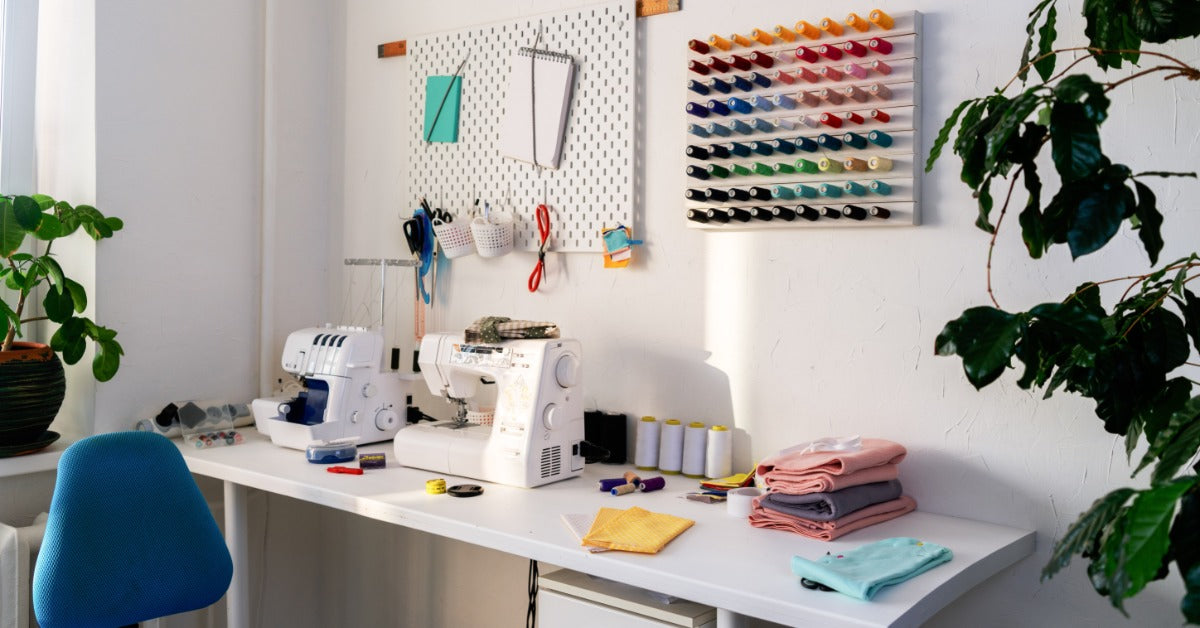
A cluttered sewing space can slow down even the most exciting project. When tools pile up and fabric stacks start to topple, it’s harder to access your creativity! The good news is that smart planning transforms even a small corner into a productive studio. Make your space more inspiring with these practical sewing room ideas that maximize space and organization.
Start With a Clear Layout
Every well-organized sewing room begins with a thoughtful layout. Take a few minutes to look at your available space and decide where your machine, cutting area, and storage should go. Good flow between these zones makes each step of your project easier.
Place your sewing machine in a spot with strong lighting and nearby outlets. Then position your cutting surface within a few steps so you can move smoothly between tasks.
Create Functional Zones
Divide your room into simple zones based on activity. Keep machine sewing in one area, pressing in another, and storage along a wall or in cabinets. This structure helps your projects move forward without constant rearranging.
Each zone should support the task it serves. For example, store presser feet and thread near your machine. Keep rulers and rotary cutters near your cutting surface.
Choose Multi-Functional Furniture
Furniture that serves more than one purpose saves space and reduces clutter. A cutting table with built-in storage keeps tools close while freeing up shelf space. Storage ottomans and benches offer hidden compartments for fabric or notions.
Expandable tables also help when you work on larger quilts or garments. Fold them down when you finish to reclaim valuable floor space.

Invest in Quality Workstations
Using dedicated sewing furniture is one of the best ways to maximize space and organization in your workspace. High-quality sewing cabinets and tables provide stable surfaces, built-in storage, and machine lifts. These pieces also protect your machine while keeping cords and accessories out of sight.
Look for these features when choosing sewing cabinets and tables to enhance your workflow:
- Built-in drawers and shelving for storing thread, notions, and accessories.
- Adjustable shelving to accommodate machines and supplies of different sizes.
- Smooth machine lift mechanisms for easy setup and storage.
- Cable management openings to keep cords tidy and out of the way.
- Fold-out or expandable surfaces for added workspace when needed.
Consider Specialized Sewing Furniture Features
Sewing cabinets and tables vary in the features they offer. Consider the tools and accessories you reach for most, and look for furniture that stores them in a practical, accessible way. Options like built-in ironing boards, soft-closing drawers with removable racks, adjustable cubbies, and embroidery storage add both convenience and structure. When you choose furniture that fits your workflow and stores your most-used items neatly, your space stays organized and ready for the next project.
Use Vertical Wall Space
Vertical storage keeps surfaces clear while maintaining easy access. It also gives you the chance to display colorful thread spools or neatly folded fabric. A well-used wall adds personality and function at the same time.
You can install shelves above your worktable to hold fabric bins or decorative storage boxes. Pegboards also work well for frequently used tools.
Rethink Your Sewing Drawers
It’s easy for sewing drawers to turn messy when small items like bobbins, needles, and presser feet slide around and mix together. Dividers create separate spaces for each item, making it easier for you to find everything you need and put them away when you’re finished.
Shallow drawers work best for small notions. Deeper drawers can hold stabilizers, patterns, or folded fabrics.
The following drawer organization ideas help keep small items tidy and accessible:
- Use adjustable dividers to separate sewing tools.
- Store bobbins in dedicated bobbin trays.
- Keep machine feet in labeled cases.
- Place measuring tapes in narrow side compartments.
- Group marking tools in small containers.

Tame Your Thread Collection
Keeping your thread organized makes every project move faster and feel more enjoyable. Many sewing cabinets include built-in drawers or dedicated thread trays that protect spools from dust and sunlight. Organizing spools by color family keeps everything neat and accessible.
A thread wall is another popular option because it keeps every spool visible and within reach of your machine. Mount the rack nearby so you can change colors quickly without interrupting your workflow.
Clear containers and stackable thread boxes also work well for larger collections. These options allow you to sort by brand, weight, or project type while keeping spools contained. Keeping your thread organized makes it easier to spot shades you need while avoiding buying duplicates.
Fold and Display Fabric Neatly
Fabric takes up the most room in any sewing space. Fold larger cuts uniformly so stacks stay neat and stable. Smaller pieces fit nicely in labeled bins.
Clear containers make it easy to see what you have without digging. You can also color-code the shelves to speed up project planning.
To make the most of your space, fold fabric uniformly. Wrap fabric around comic book boards or mini bolts for a clean display that keeps edges aligned and reduces wrinkling. Finally, arrange fabrics vertically instead of horizontally when possible. Vertical storage allows you to pull one piece without disturbing the rest.
Tips for Containing Fabric Scraps
Scraps tend to scatter if they don’t have a designated home. Choose one bin, basket, or drawer specifically for leftover pieces, and avoid mixing them with full yardage. Fold medium-sized scraps uniformly and store tiny remnants in smaller labeled containers.
Manage Modern Sewing Tech
Today’s sewing setups go beyond just a machine and thread. Many sewists use embroidery modules, computerized machines, design software, USB drives, and tablets to manage patterns and stitch files.
Keep your sewing technology organized and protected with these practical tips:
- Store embroidery modules in padded compartments inside sewing cabinets or tables.
- Use labeled containers for USB drives, SD cards, and software accessories.
- Install cable clips or cord sleeves to prevent tangled power cords.
- Keep manuals and quick-reference guides in a dedicated drawer or binder.
Creating a space that supports your passion takes intention, yet the payoff is highly rewarding! With thoughtful layout choices, smart storage, and quality furniture, your sewing room becomes a place you look forward to using. Use some or all of these ideas to make your space welcoming and ready for any project.