

Embarking on your sewing journey is an exciting creative endeavor, and selecting the right tool is your first major step. The world of sewing machines is vast, with options ranging from simple mechanical models to sophisticated computerized powerhouses.
With sewing, you can bring your ideas to life with just fabric and thread. Imagine crafting a one-of-a-kind dress, designing cozy quilts for loved ones, or even upcycling old clothes into something fresh and stylish. The possibilities are endless, from practical repairs to bold artistic projects. A quality sewing machine will help you grow your skills with confidence. Find out what you need to know before buying your first sewing machine.
Identify Your Sewing Goals
Before you start shopping, think about the projects you want to tackle. Are you interested in basic clothing repairs, crafting custom garments, or creating intricate quilts? Your sewing ambitions influence the type of machine you need.
A person interested in quilting might need a machine with a large throat space and a walking foot, while someone focused on fashion might prioritize a variety of decorative stitches and buttonhole options, or a serger. Simple mending and hemming tasks, on the other hand, require straight and zigzag stitches. Identifying your needs will narrow down the sewing machine options and make it easier for you to decide.
Mechanical vs. Computerized Machines
Sewing machines fall into two main categories: mechanical and computerized. Mechanical machines operate with manual dials and knobs, making them straightforward and easy to maintain.
Computerized machines offer a wide array of automated features controlled by an LCD screen. These models provide push-button stitch selection, automatic needle threading, and precise speed control, which can be very helpful for beginners.
The Computerized Advantage
Many beginners feel intimidated by computerized machines, but their features actually simplify the learning process. An automatic thread cutter saves time and frustration, while a needle up/down function makes pivoting at corners seamless. With programmable stitch sequences, you can create consistent, professional-looking results with minimal effort. These features will continue to support you as you tackle more complex projects.
Consider Essential Stitch Options
Even the most basic sewing machines come with a variety of built-in stitches. A beginner machine should at the very least include a straight stitch, a zigzag stitch, and a buttonhole stitch. These three functions will cover a lot of sewing tasks, from seaming and finishing edges to adding closures.
As you explore different models, you will encounter machines with dozens or even hundreds of stitches. Decorative stitches can add flair and personalization to many projects.
Here are some of the most useful stitches a beginner should look for:
- Straight stitch: The most fundamental stitch, used for constructing seams and topstitching.
- Zigzag stitch: A versatile stitch used for finishing raw edges, sewing stretch fabrics, and creating decorative effects.
- Blind hem stitch: Creates nearly invisible hems on skirts, trousers, and curtains.
- Stretch stitch: Resembles a tiny lightning bolt and is perfect for sewing knit fabrics without breaking threads.
- Buttonhole stitch: An automated function that creates perfectly sized buttonholes in one or four steps.
Set a Realistic Budget
Good quality sewing machine prices can range from a few hundred dollars to several thousand. As a beginner, you want to invest in a reliable, well-built machine that fits within your budget.
A good entry-level machine can offer a solid balance of features and durability. Remember to also account for the cost of essential accessories, such as needles, thread, scissors, and fabric.

Research Brands and Reviews
Certain brands have a long-standing reputation for quality and reliability in the sewing world. Brands like Brother, BERNINA and Janome are well-regarded for producing durable machines with excellent user support. Reading customer reviews and professional comparisons can provide valuable insights into a machine’s performance and longevity.
Look for reviews from users who have similar sewing interests to yours. One of the best tips for buying your first sewing machine is to talk to a local authorized dealer who can offer expert advice and demonstrations. These specialty shops provide personalized service, repair support, and classes that you will not find at big-box retailers.
Evaluate Included Accessories
Most sewing machines come with a set of standard accessories to get you started. These typically include several presser feet, bobbins, a set of needles, a seam ripper, and a small brush for cleaning. Some machines offer more specialized accessories, which can be particularly useful for certain projects.
When considering what sewing machine to buy, check for these helpful additions:
- Zipper foot: Allows you to sew very close to zipper teeth for a clean installation.
- Buttonhole foot: Guides the fabric to create uniform buttonholes.
- Walking foot: Feeds multiple layers of fabric evenly, which is essential for quilting.
- Free-arm capability: A removable section of the sewing bed that makes it easier to sew cylindrical items like sleeves and pant legs.
- Extension table: Provides a larger work surface to support big projects like quilts or curtains.
Consider Long-Term Maintenance
Like any piece of machinery, a sewing machine requires regular maintenance to keep it running smoothly. This includes routine cleaning to remove lint and dust, oiling moving parts, and frequently changing the needle.
Think about where you will get your machine serviced for more complex repairs. Buying from a dealer often includes access to professional maintenance and repair services, which is a major benefit. A well-maintained machine will serve you reliably for many years.
Test Drive the Machine
If possible, try out a sewing machine before you buy it. Visiting a local dealer gives you the opportunity to feel how the machine operates, hear how it sounds, and see the stitch quality firsthand.
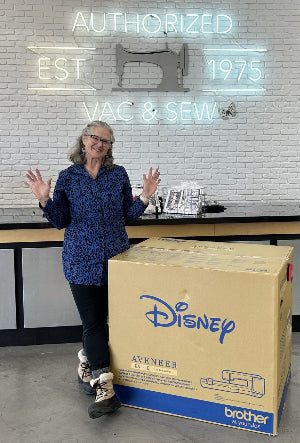
At Authorized Vac and Sew, we have the best selection of sewing and embroidery machines for sale in Fresno. We love to share our passion for sewing, and we’re happy to help you compare options and learn about sewing machine features. Testing a few different models will give you confidence that you are choosing the right one for your needs. If you’re looking for a machine on our website, we’re more than happy to answer any of your questions and help you find the machine that works for you.
Buying your first sewing machine is an exciting step into a world of self-expression. In this hobby, there’s always a new skill or technique to learn and refine. By focusing on your goals, budget, and the features that matter most, you’ll find a sewing machine that feels like an extension of your imagination. Whether you’re sewing cozy quilts, stylish outfits, or practical repairs, the right machine will make every project more enjoyable.