

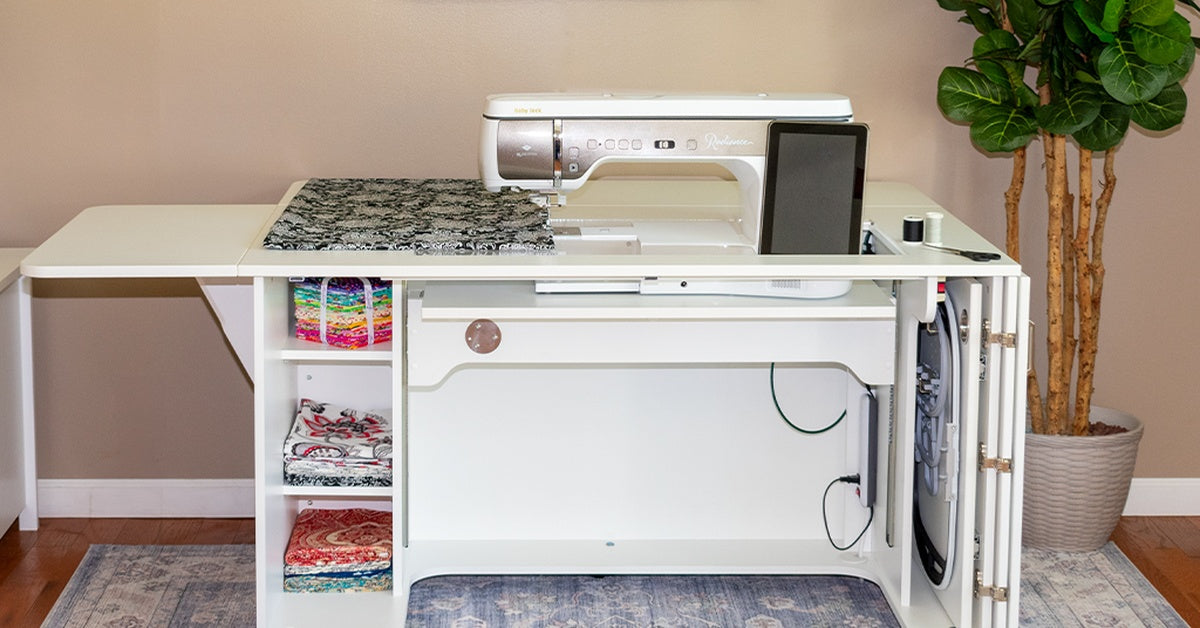
A functional sewing space is well-organized and supports you as you sew, hem, repair, alter, decorate, and more. One of the key pieces in a sewing space is a dedicated sewing table. This furniture provides the stability, space, and storage you need to bring your creative projects to life with ease. Find out what to look for in the perfect sewing table so you can select the piece that enhances your entire workflow.
The Right Size and Surface Area
Before you start shopping, measure the area where you plan to place the table, making sure there is enough room to move around it comfortably. You will also need space for your chair and easy access to drawers or shelves.
Additionally, to get the right size table for you, consider the types of projects you enjoy. A quilter will require a much larger surface than someone who primarily mends clothes. A generous work surface allows you to spread out fabric and keep your tools within arm’s reach, preventing clutter and frustration. Therefore, look for a table that offers ample space for both your machine and your project materials.
An Extendable Side Leaf Adds Space
An extendable side leaf is a handy table section that folds out to increase your workspace when you need it. You can open it up for larger projects or tuck it away to save space when you’re finished. This smart feature is perfect for small rooms or multi-purpose spaces. With an extendable leaf, your sewing table easily adapts to whatever you’re working on.
Stability and Sturdy Construction
A sewing machine generates vibrations, especially when running at high speeds, so you want a well-constructed table. A wobbly or flimsy table can cause skipped stitches, uneven seams, and general frustration as you work. Look for tables made from solid, durable materials like hardwood, heavy-duty MDF, or steel frames.
Test the table’s stability by giving it a gentle shake to check for any movement or weakness in the joints. On a related note, locking casters can offer stability when you need it and mobility when you want to rearrange your space.

Adjustable Height and Ergonomics
Comfort is key to enjoying long hours spent sewing, and proper ergonomics can prevent back, neck, and shoulder pain. An adjustable-height table allows you to set the work surface at the perfect level, whether you prefer to sit or stand. This customization promotes better posture and reduces physical strain over time.
When sitting, your arms should be at a 90-degree angle to the table, and your feet should rest flat on the floor. An adjustable table makes it easy to achieve this ideal posture, accommodating different chair heights and personal preferences. With this adaptability, you can sew for longer periods without discomfort.
Choosing Between Sitting and Standing
Some of the most versatile tables offer both sitting and standing height options, which can be a fantastic feature for your health and creativity. Switching between sitting and standing throughout the day improves circulation and reduces the fatigue associated with remaining in one position for too long. Furthermore, a standing-height table can be great for tasks like cutting fabric or planning layouts because it gives you a better vantage point.
Built-in Machine Lift
A machine lift allows you to position your sewing machine at different levels within the table. You can adjust this mechanical platform to place your machine in a flatbed, free-arm, or storage position. The flatbed position creates a seamless, flush surface between the machine and the table, which is ideal for quilting and large projects.
The free-arm position raises the machine to its standard height, perfect for everyday sewing tasks like hemming sleeves or trousers. When you are finished, the storage position lowers the machine completely into the cabinet, protecting it from dust and freeing up the table surface for other activities.
Smart Storage and Organization
When choosing the perfect sewing table, one of the top considerations is built-in storage. Drawers, shelves, and cubbies help you keep your thread, bobbins, scissors, and other notions tidy and accessible. A clutter-free workspace allows you to focus on your creativity without constantly searching for misplaced tools.
Here are some organizational features to look for in a sewing table:
- Deep drawers for storing fabric scraps or patterns.
- Shallow drawers with dividers for small notions like buttons and pins.
- Thread racks or pegs to keep your spools organized and untangled.
- Magnetic trays to hold pins and needles securely.
- Built-in power strips to manage cords for your machine and iron.
Portability and Compact Design
If you have a smaller sewing space or need to put your table away when it’s not in use, a portable or folding design is an excellent choice. Many tables are equipped with locking casters, allowing you to easily move them around the room or into a closet for storage. This feature is particularly useful for those who use a multi-purpose room for their crafting.
Foldable tables often feature drop-leaf extensions that provide a large work surface when needed and fold down to a compact size afterward. With a drop-leaf extension, you get the benefit of a spacious sewing area without permanently sacrificing your living space.
Compatibility With Your Machine
Before purchasing a sewing machine table, you must confirm that it is compatible with your specific sewing machine model. The opening for the machine, particularly on tables with a lift mechanism, needs to be the right size and shape. Most table manufacturers provide dimensions for the machine cutout, so compare them to your machine’s measurements.
Additionally, if you are considering a table with a flatbed insert, check that an insert is available for your machine. These inserts are custom-cut to fit snugly around your sewing machine, creating that smooth, continuous surface.
Exploring Table Styles and Finishes
Your sewing table is a piece of furniture, so it should complement your room’s decor. High-quality sewing machine tables come in various styles, allowing you to choose one that matches your personal taste.
Beyond aesthetics, the table’s finish should be durable and resistant to scratches, nicks, and moisture. A laminate or high-pressure surface is often a practical choice, as it is easy to clean and can withstand the wear and tear of daily use.
Choosing a sewing table is a significant investment in your craft, so it is important to find one that meets all your needs. By considering size, stability, ergonomics, and storage, you can select a table that will serve you well for years to come. Ultimately, the perfect sewing table will not only support your machine but also inspire you to create more. A well-designed workspace makes every project more enjoyable, so don’t hesitate to invest in a quality sewing machine table.