

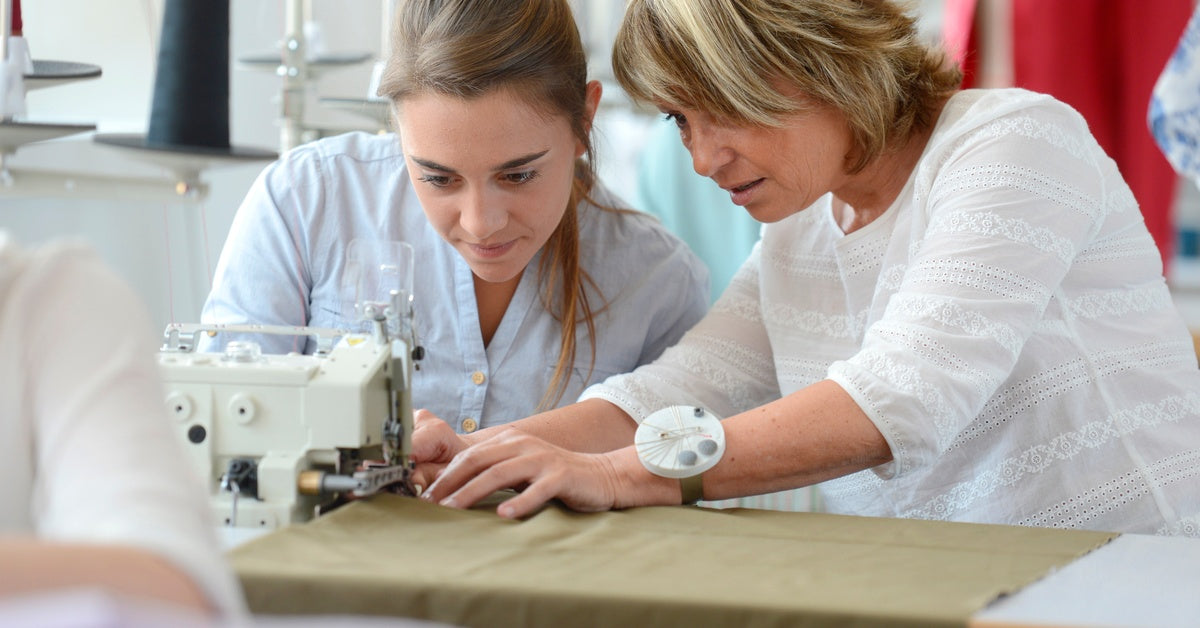
You can pick up a surprising amount from online sewing videos, especially when you need a quick tip or want to watch a machine in action. Even so, a playlist cannot watch your hands, correct your posture, or tell you why your stitches keep going off track. For sewists of all levels, sewing classes beat DIY YouTube learning for making real progress. In a class, you get structure, feedback, and a clearer path forward, which makes the learning curve more fun and rewarding.
Real-Time Feedback Speeds Progress
A video can show you how to thread a machine, but it cannot tell you what you missed when your machine jams halfway through. In a class, an instructor can spot small mistakes right away, like incorrect bobbin placement or poor fabric handling. With timely correction, you can fix the issue quickly and prevent it from becoming a stubborn habit.
Sewing depends on small details that build on each other, and a good teacher helps you as you refine your technique. Their practical feedback gives learning more staying power than replaying the same clip repeatedly. When an instructor shows you how to adjust your seam guide or support fabric on the machine, the lesson becomes both physical and visual. Your hands feel the difference, helping to cement the memory.
Better Learning Structure
YouTube is full of useful sewing content, but it rarely follows a clear path for a specific learner. One video might assume you already know the basics of machine learning, while the next jumps into a project that moves far too fast. As a result, people end up piecing together their education in a scattered way. Additionally, it can be hard to identify your own knowledge gaps and what to learn next.
A class usually builds skills in a more logical order. You start with core machine tasks, then move into control, accuracy, and project skills that match your current level. This structure helps learners of all levels progress more smoothly.
Practice With Purpose
Practice works best when you know what you are trying to improve and why. A class gives each session a purpose, whether that means mastering straight seams, improving control, or learning a new machine feature. That direction keeps repetition from feeling dull, unfocused, or pointless.
Fewer Mixed Messages

Online content creators teach in different styles, use different machines, and follow different preferences. That variety has value, but it also creates confusion when one person says to handle a task one way and another says the opposite.
Here are some common types of mixed messages viewers may encounter across sewing tutorials on YouTube:
- Different seam allowance recommendations for the same type of project.
- Conflicting advice on thread tension settings.
- Different presser foot suggestions for similar techniques.
- Inconsistent cutting methods.
- Mixed guidance on stitch length and type for the same fabric.
- Different pressing techniques or when to press seams.
- Conflicting opinions on using pins, clips, or no fasteners at all.
- Different setup steps that assume different machine features or brands.
In an in-person class, the instructor can explain which choices come down to personal preference and which ones matter more for accuracy, fabric handling, or machine performance. They can also show why one method works better in a given situation, rather than leaving you to sort through conflicting opinions on your own. As a result, it becomes much easier to distinguish between flexible techniques and true sewing basics.
Technique Is Clearer
Sewing is full of motions that look simple until you try them yourself. Keeping a seam allowance even, pivoting neatly at a corner, or guiding fabric without pulling all take practice and explanation. In person, a teacher can demonstrate those actions and then watch you repeat them correctly.
Videos also flatten the experience because they show a limited angle and limited versions of the movement. In a class, you can step closer, ask for another demonstration, and compare your result with the sample in front of you. The gap between seeing and doing gets much smaller.
Community Keeps You Going
A class does more than teach technique. It also gives you a room full of people who care about the same hobby and understand the same learning curve. Shared enthusiasm makes it easier to stay motivated.
Group learning also creates natural encouragement. When you see someone else solve a problem or finish a project, your own goals start to feel more reachable. Instructors and classmates can share practical ideas, machine tips, and project inspiration.
Confidence Grows Faster

Many new sewists do not quit out of lack of interest. They quit because repeated mistakes make the hobby feel harder than it should. Sewing classes beat DIY YouTube learning because they provide each person with support before they feel overwhelmed by frustration or confusion.
Sewing is more enjoyable when you trust yourself at the machine. You stop second-guessing every setting and start focusing on the project itself. Additionally, the stronger your skills, the more you can branch out and try different types of projects. The sewing world is your oyster, full of fun possibilities! And a guide can help you unlock them.
The Machine Makes More Sense
Machine sewing comes with plenty of moving parts, literally and figuratively. Needle choice, thread type, presser feet, stitch settings, and fabric behavior all affect the outcome. In a class, those pieces start to connect in a way that feels practical instead of technical.
Newer machines offer exciting features, yet they can also feel intimidating without hands-on help. A teacher can explain what a setting does and when it is worth using.
Classes Support Better Projects
The difference between a frustrating project and a satisfying one usually comes down to good preparation and solid technique. Classes help you choose projects that fit your current skill level, so you are less likely to run into too many problems right away. As a result, the finished project usually looks neater and feels more rewarding to complete.
Here are some of the benefits of learning with a classroom guide:
- Cleaner seams and straighter stitching.
- Better fabric control at the machine.
- More confidence in choosing project materials.
- Fewer avoidable setup mistakes.
- Stronger finishing habits on completed work.
Join a Class With Us!
Sewing should feel creative and satisfying, not like a cycle of confused guesswork. Classes bring structure, support, and real-time help that videos simply cannot match on their own. They also build confidence, sharpen technique, and connect learners to a larger sewing community that keeps the hobby alive.
When you want steady progress and a more enjoyable experience at the machine, an in-person class is usually the better place to start. If you are ready for more hands-on support, our sewing classes in Fresno, California, offer a welcoming place to build your skills. You can expect practical instruction, help with machine sewing techniques, and a clearer path forward at your own pace. We look forward to seeing you!