

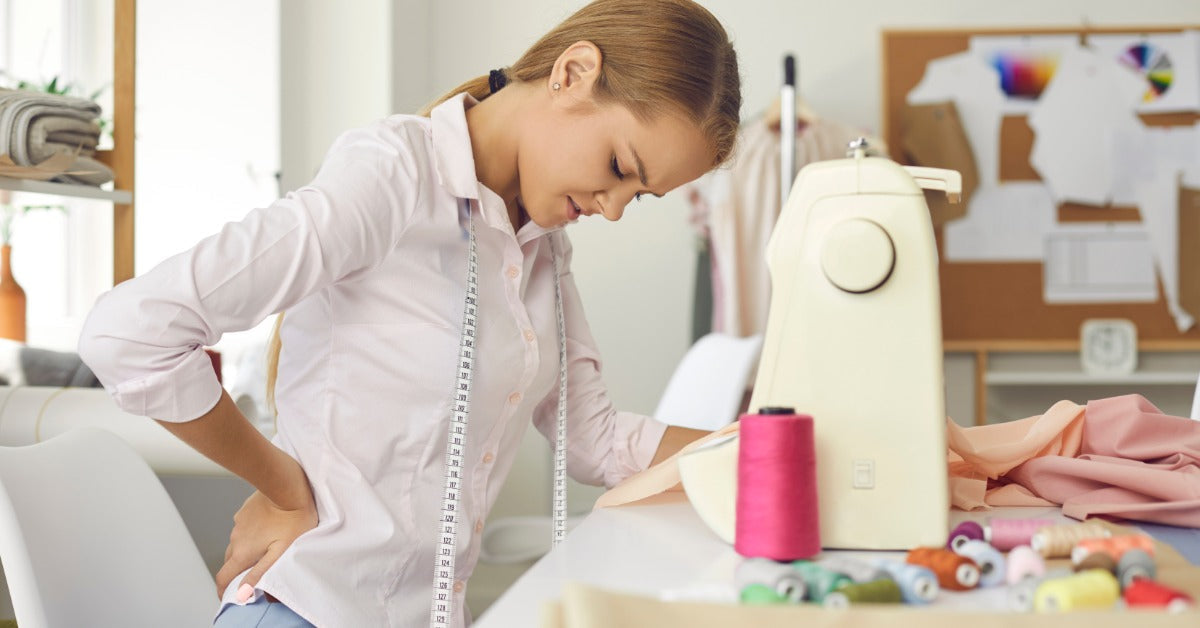
A good sewing session can make the rest of the world fade into the background. You start with one seam, one repair, or one small detail, and suddenly you’ve spent the afternoon at your machine. However, even when you’re completely focused on the project, your body still responds to your chair, the table height, the lighting, and repetitive motions. The science of comfort helps you build a workspace that supports your body and creativity during long sewing sessions.
Correct Posture Prevents Aches and Pains
Comfort starts with how your body lines up while you work at the machine. Your shoulders should stay relaxed, your elbows should rest close to your sides, and your hands should reach the fabric without stretching forward. Your feet should also have steady support, either flat on the floor or on a footrest.
Good posture doesn’t mean sitting perfectly still. You still need room to shift, reach, guide fabric, and check your stitches. Instead, the goal is to create a supportive setup that doesn’t make your movements stiff or restricted.
Table Height Affects Alignment
Table height shapes how your upper body sits while you sew. When the work surface sits too high, your shoulders may lift and stay tense. When it sits too low, you may start leaning your head, neck, and upper back toward the needle area.
A better setup keeps the machine close so that your elbows can stay near your sides. If the height feels off, try adjusting your chair, adding a footrest, or shifting the machine closer. Your table should also support the fabric around the machine, so larger pieces don’t pull against your hands.
Seating Supports Back Comfort
A sewing chair does more than give you a place to sit. It supports your lower back, positions your hips, and keeps you at the right height for machine work. Each of these details becomes especially important when you’re sewing for longer stretches. As you compare sewing chairs for sale, focus on the features that help you sit at the right height without straining your shoulders or lower back.
Sewing chairs may include several features for improved comfort and stability:
- Adjustable seat height lets you line up your chair with your sewing table and machine so your arms can rest comfortably.
- A supportive backrest makes your lower back feel steadier during longer sewing sessions.
- A comfortable padded seat softens pressure under your hips and tailbone.
- Smooth-rolling casters let you move more easily around your sewing area.
Varied Lighting Reduces Eye Strain

Lighting affects your comfort by changing how closely you need to lean toward the needle area. When your workspace feels dim, shadowy, or unevenly lit, your eyes work harder, and you may strain your neck as you move closer to the machine. Better lighting helps you see stitches clearly, sit back more naturally, and stay focused on the project instead of fighting glare or shadows.
Task Lighting Brightens Close Work
A task light near the machine gives you a clearer view of the needle, presser foot, and stitch line. Aim the light toward the work area. This helps you see thread color, seam placement, and fabric texture without squinting. It’s especially helpful when you’re working with dark fabrics or detailed stitching.
Room Lighting Reduces Contrast
If the machine area is bright but the rest of the room is dark, your eyes may keep adjusting as you look up, reach for tools, or check fabric. Soft, even lighting around the room reduces the contrast between your machine light and the surrounding space. Use an adjustable desk lamp, floor lamp, or overhead light to brighten the full sewing table, not just the needle area. Place the light slightly to the side of your dominant hand so it doesn’t cast a shadow over your stitch line.
Hand Support Improves Control
Even though the machine handles the stitching, your hands still do careful work. They guide fabric, smooth layers, trim threads, hold seams, and make small adjustments throughout the project. Because of that, your wrists and fingers need support too.
Keep your wrists as neutral as possible, rather than bending them sharply while you guide fabric. Let the table support the weight of the material so your hands can steer rather than pull. Additionally, keep small tools close enough that you don’t have to keep reaching across the table. Pause between detailed steps to open and close your hands, stretch your fingers, and release any grip tension.
Smooth Fabric Flow Saves Effort

Fabric should move through the machine without dragging, bunching, or falling off the table. When the material fights you, your arms and hands must keep correcting it. That extra effort can make the whole session more tiring.
Try these tips to help fabric move with less resistance:
- Clear clutter around the machine bed.
- Keep extra fabric from hanging off the table and tugging while you sew.
- Place tools within easy reach.
- Use a table surface with enough depth.
- Reposition large projects before they pull.
Large Projects Need Space
Large projects need extra space before they become hard to handle. Otherwise, quilts, curtains, costumes, and long garment pieces can pull across your lap or trail off the edge of the table. Rolling or folding extra fabric to one side can keep the needle area manageable.
Movement Keeps Stiffness Away
When you barely move, your muscles can remain slightly contracted as they maintain the same sewing posture. Your hips, back, shoulders, and hands may start to feel stiff due to reduced blood flow and limited joint movement. Try gentle stretches to move your hips, shoulders, back, and hands. Then take a short walk around the room to warm your body up and get your blood flowing.
To keep away aches, you can:
- Roll your shoulders after finishing a seam.
- Stand up after winding a bobbin.
- Stretch your fingers between detailed steps.
- Shift your feet during longer runs.
- Look away from the needle area regularly.
Long sewing sessions should leave you proud of what you made, not distracted by soreness you could have prevented. The science behind a more comfortable setup comes down to how your body sits and moves at the machine. The right chair, lighting, table height, and fabric support reduce unnecessary strain. Don’t forget to take breaks to stretch and walk around to prevent stiffness.