

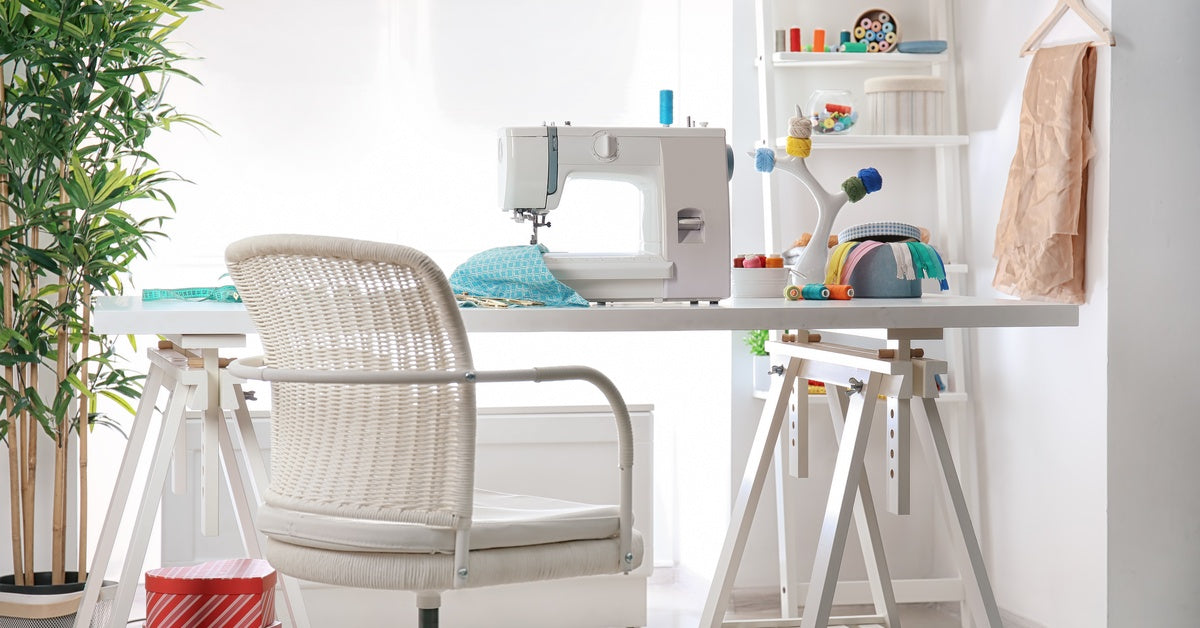
Sewing projects run more smoothly when your space supports you instead of slowing you down. If you’ve ever stopped mid-seam to hunt for a tool, shifted in an uncomfortable seat, or wrestled fabric around a wobbly surface, you’ve felt how furniture affects your momentum. Your furniture choices impact sewing efficiency by influencing your posture and your reach. See how you can sew with greater ease and motivation with the right tables, seating, and storage.
A Stable Table Saves Time
A stable sewing table keeps vibration in check, so the machine stays steady and the fabric feeds more evenly. When the surface flexes or rattles, your hands instinctively grip tighter and make tiny corrections, which slows your pace and can throw off accuracy. You’ll notice this most on faster stitching, thicker seams, or long runs where even small shakes feel distracting.
Projects with slippery knits, bulky layers, quilts, and big home décor pieces tend to magnify vibration because the fabric’s weight pulls and shifts as you sew. A sturdy table gives that fabric a supported “runway,” so it doesn’t drag off the edge and tug near the needle. With a solid, level surface under the machine, you get a more predictable feel stitch after stitch. This is especially noticeable during detailed work like zippers, edge-stitching, and quilting lines.
Surface Space Improves Flow
Extra surface area gives fabric a place to rest, which reduces tugging and bunching near the needle. When the material is properly supported, you spend less time repositioning layers and more time sewing. Additionally, a larger workspace makes it easier to keep tools visible without stacking or crowding.
To keep fabric supported from start to finish, set up these key work zones:
- A sturdy machine table or workstation.
- A dedicated cutting table or oversized mat area.
- An ironing board or pressing table for crisp seams.
- A clear layout area for blocks, patterns, and pieces.
- A small landing spot for tools and notions.
Sewing Chairs Improve Posture

Your sewing chair affects how you reach the machine, how you pedal, and how long you stay comfortably seated. If your seat height forces you to perch or slump, your hands and wrists tend to compensate, which slows precise work.
Creative workers need supportive seating, and sewing chairs have special features for greater comfort and stability. Look for supportive cushioning, a backrest that feels steady, and height adjustment that matches your table and machine setup.
Correct Heights Prevent Strain
Furniture height affects your shoulders, elbows, and wrists, which affects how steadily you guide fabric. When your setup feels too high or low, your arms work harder than they should, and fine control feels more tiring. Therefore, matching chair height to table height supports smoother, more precise handling.
Here are some common signs your furniture heights need adjustment:
- Your shoulders rise while you sew.
- Your wrists bend sharply as you guide fabric.
- Your feet struggle to stay steady on the pedal.
- You lean forward to see the needle area.
- You feel tension after short sessions.
Tips for an Ergonomic Setup
For comfortable sewing sessions, set your chair height so your feet rest flat and your knees are bent at about 90 degrees. Then, adjust the table height so your elbows stay at 90–100 degrees when your hands rest near the needle.
When seated at the sewing table, your shoulders should be relaxed rather than lifted. If your chair needs to rise to hit that elbow angle, add a footrest or platform so your feet stay supported and steady.
Next, adjust the equipment positioning. Position the machine so the bed sits level with your forearms, and keep the pedal where your ankle can move without stretching your leg forward.
Storage Reduces Interruptions

When storage feels scattered, tools tend to wander, and you end up spending extra time figuring out where something went. That confusion doesn’t just slow you down in the moment—it also makes cleanup harder because nothing has a clear “home” when you’re finished. It’s frustrating to find that your seam ripper, clips, or marking pen disappeared into a random pile. With intuitive storage, you always know where to grab what you need and exactly where to put it back.
These storage choices support faster, cleaner sewing sessions:
- Drawer organizers that separate small notions.
- Clear bins for fabric by type or project.
- Pegboards or wall rails for frequently used tools.
- A rolling cart for current project supplies.
- A dedicated spot for your iron and pressing tools.
Use a Thoughtful Layout
Your furniture layout influences how many steps you take, how far you reach, and how frequently you pivot around obstacles. When tools and surfaces sit in logical zones, you move smoothly from cutting to stitching to pressing without weaving through clutter. Additionally, clear pathways reduce accidental snags on cords, fabric piles, or chair legs.
Many sewists like to create a simple work triangle between the machine, cutting area, and pressing area to minimize backtracking. Arrange these stations so you can turn and transition without having to carry heavy stacks across the room. Moreover, keep a small area near each station for tools specific to that step, such as clips at the machine or rulers near the cutting surface.
Furniture Upgrades That Pay Off
You don’t need a full-room makeover to feel a difference in your workspace. Start by noticing where you pause, reach, or reset your posture. These moments point directly to the furniture that needs attention. Then, focus on upgrading furniture to support your process.
When choosing sewing furniture, think about how the piece will improve your space. Will it improve comfort, stability, surface support, and accessible storage in your space? Pay attention to size and placement too, since a piece that blocks walkways or crowds your workstation can slow you down.
When your workstation fits your needs, sewing feels calmer and more predictable from the first seam to the last press. A solid worktable gives you a dependable base, so you aren’t fighting wobble or drag while you sew. A well-fitted chair supports your back and helps you reach the pedal and controls without hunching. The right furniture improves sewing efficiency by removing the small obstacles that drain your time and attention.